User Guide
Complete documentation for researchers and administrators
What is the Balloon Analogue Risk Task?
The Balloon Analogue Risk Task (BART) is a computerized behavioral measure designed to assess risk-taking propensity in laboratory and clinical settings. Developed by Lejuez and colleagues in 2002, the BART has become one of the most widely used experimental paradigms for studying decision-making under uncertainty.
Task Overview
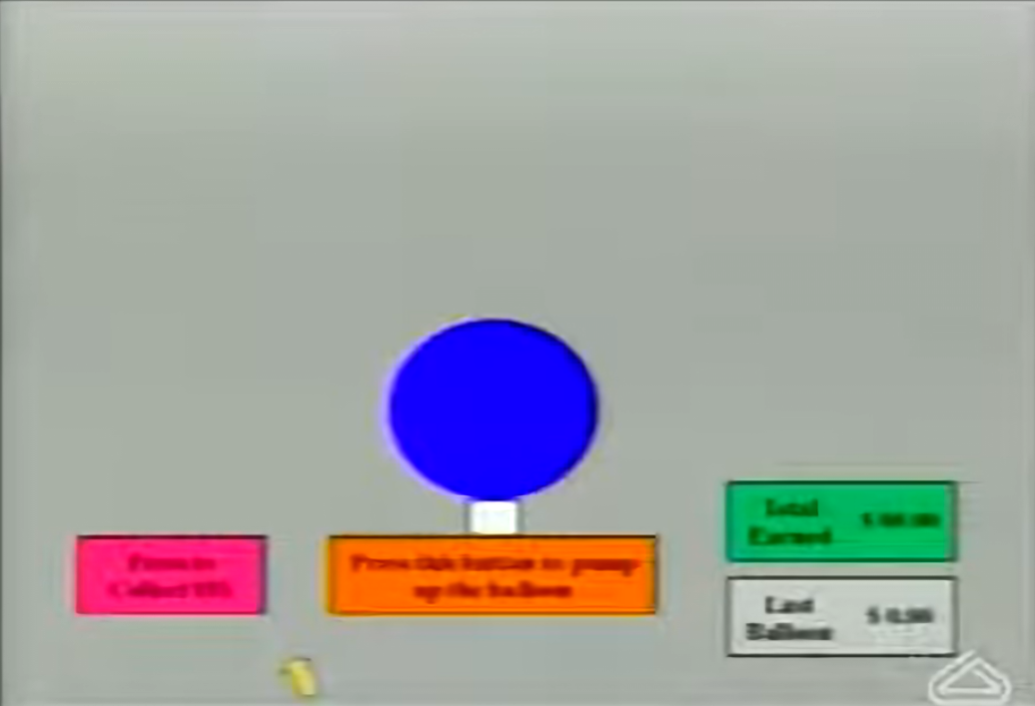
During the BART, participants are presented with a balloon on the screen and have the opportunity to inflate it by pressing a button. Each pump earns a small monetary reward that accumulates in a temporary bank. However, balloons have an unknown explosion point—if the balloon explodes, all money in the temporary bank for that balloon is lost. Participants can choose to "collect" their earnings at any time, transferring the accumulated amount to a permanent bank before the balloon explodes.
What Does It Measure?
The BART's main metrics of risk-taking proclivity is average adjusted pumps:
- Average Adjusted Pumps: the average number of pumps on balloons that did not explode
- Other measures: The overall number of pumps across all trials and explosion frequency have also been used in the past but show weaker correlations than average adjusted pumps
Applications in Research
The BART has been validated across numerous studies and populations, demonstrating significant correlations with real-world risk behaviors. Researchers use the BART to study:
- Substance use and addiction vulnerability
- Gambling behavior and problem gambling
- Health-related risk behaviors
- Decision-making in clinical populations
- Neurobiological correlates of risk-taking
- Developmental changes in risk propensity
Historical Context
The original BART was introduced in a seminal 2002 publication in the Journal of Experimental Psychology: Applied. Since then, it has been cited thousands of times and adapted for various research contexts, including neuroimaging studies, cross-cultural research, and clinical intervention trials. The task's ecological validity—its demonstrated relationship with real-world risk behaviors—has made it particularly valuable for translational research bridging laboratory findings and practical applications.
Getting Started with the BART Platform
This guide will walk you through setting up your research study using our BART platform, from creating an account to distributing experiments to participants.
Creating an Experiment
From your researcher dashboard, you can create customized BART experiments:
- Click "+ New Experiment" on your dashboard
- Name for your study (e.g., "Adolescent Risk Study - Fall 2024")
- Configure task parameters if nessesary:
- Number of balloon trials (default: 30)
- Explosion probability range
- Reward values per pump
- Display settings and instructions
- Set data collection preferences and participant information fields
- Generate your unique experiment code (format: ABC-1234)
Distributing Experiments to Participants
Once your experiment is configured, you can distribute it to participants two ways:
Method 1: Direct Code Distribution
- Share the generated experiment code (e.g., PSY-2401) with participants
- Participants enter the code on the home page under "Participant Access"
- Ideal for in-person laboratory studies
Method 2: Direct Link
- Generate a direct URL link from your dashboard
- Distribute via email, survey platforms, or participant portals
- Link automatically loads the correct experiment configuration
Support: If you encounter any technical difficulties during setup, please contact Layne Groom [email protected]
Content In Development
The comprehensive BART guide is currently being written and will be available soon.
This section will include detailed theoretical background, methodological considerations, scoring guidelines, and interpretation frameworks.
Download PDF Guide (Coming Soon)Terms of Use
The BART Research Platform is provided as a free resource for the scientific community to facilitate behavioral research. By using this platform, you agree to the following terms and conditions:
Academic and Research Use
This platform is intended exclusively for academic research, clinical assessment, and educational purposes. Use for commercial purposes, including but not limited to employee screening, consumer assessment, or market research, is strictly prohibited without prior written authorization.
Citation Requirements
Researchers using this platform are required to provide appropriate citations in all publications, presentations, and reports that include data collected using this system:
For the original BART paradigm, cite:
For this platform/software, cite:
Modifications and Adaptations
If you modify the task parameters or procedures from the standard BART protocol, you must clearly describe these modifications in your methodology section. Substantial deviations from the original paradigm should be noted when interpreting results in the context of existing literature.
Data Privacy and Security
As the researcher, you are responsible for ensuring compliance with all applicable data protection regulations (including GDPR, HIPAA, etc.) in your jurisdiction:
- Obtain appropriate informed consent from all participants
- Do not collect personally identifiable information unless necessary and approved by your IRB
- Ensure secure storage and transmission of participant data
Institutional Review
Researchers must obtain approval from their Institutional Review Board (IRB) or Ethics Committee before collecting data from human participants. This platform does not provide IRB approval or substitute for institutional oversight.
Data Ownership and Responsibility
You retain full ownership of all data collected through this platform. We do not access or analyze your research data.